Updated August 14th, 2026
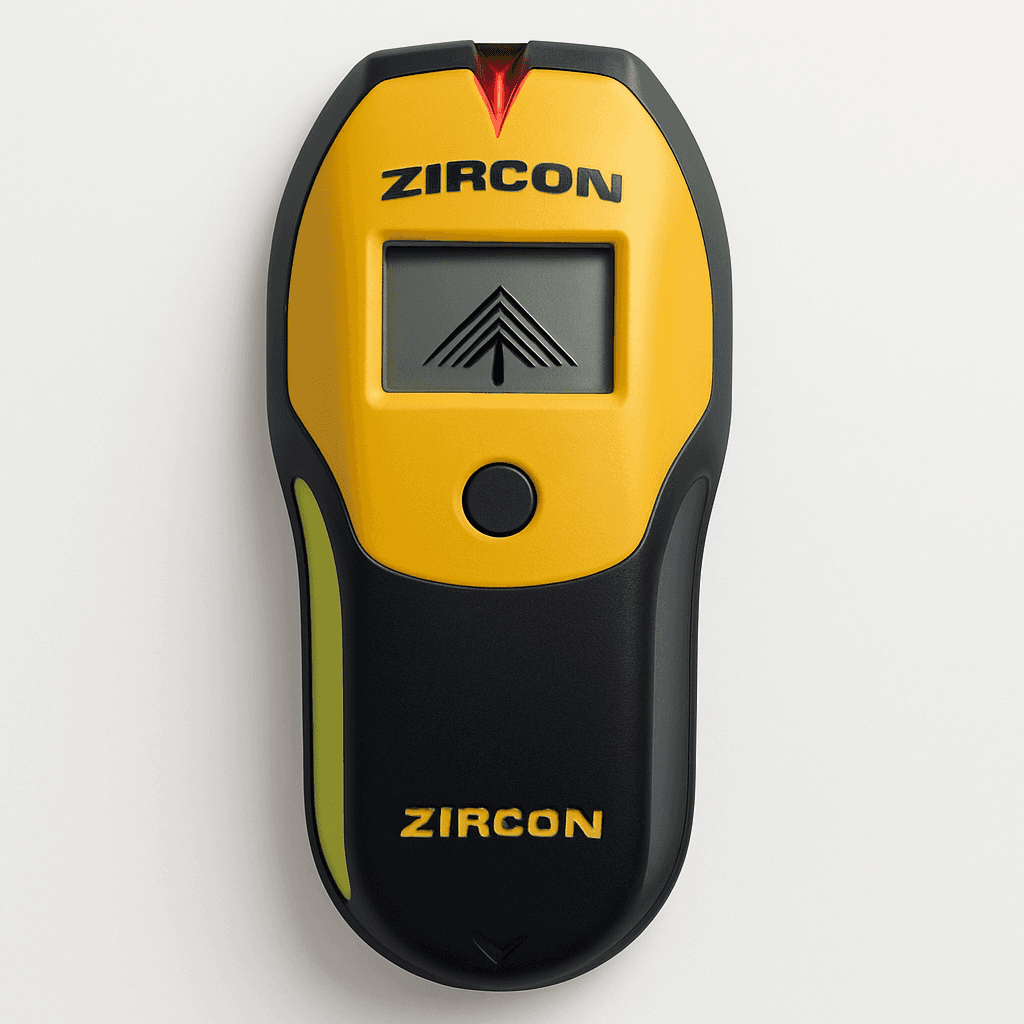
A stud finder earns its place in a toolbox the first time a screw goes into drywall instead of the framing behind it, which for anyone hanging a shelf, mounting a TV, or installing curtain rods is a mistake that's easy to make and annoying to patch. Compared to guessing based on outlet spacing or tapping on the wall and listening for a change in sound, a real stud finder tells you where the framing actually is, and the right one can also warn you about live wiring or metal hardware hidden behind the drywall before you ever pick up a drill.
For this guide, we looked at four stud finders built for different needs and budgets, and made sure no two solve the same problem for the same buyer. The Zircon StudSensor A100 is the best value pick for occasional DIYers who want a reliable, no-fuss scanner without paying for features they won't use. The Franklin Sensors ProSensor 710+ is the best overall pick for buyers tackling a real project who want fast, accurate stud location without a learning curve. The Zircon MultiScanner i520 is the premium pick for frequent renovators and contractors who need metal detection and live-wire warning alongside precise stud centers. And the CH Hanson Magnetic Stud Finder is the pick for buyers who want a battery-free, unbreakably simple tool that never needs calibration.
As an Amazon Associate I earn from qualifying purchases. Links on this page are affiliate links.
We compared stud finders based on detection accuracy, detection modes, ease of use, and price, and made a point of not picking four units aimed at the same buyer. On raw accuracy and feature depth, the Zircon MultiScanner i520 wins outright, since it's the only pick here that adds true metal-object scanning and live AC-wire detection on top of center-finding stud location, at a real but modest price premium. The Franklin Sensors ProSensor 710+ trades that extra safety feature for speed and simplicity, using a 13-sensor array that lights up every stud edge in its path at once rather than requiring a slower single-point sweep. The Zircon StudSensor A100 delivers a stripped-down version of the same electronic-scanning approach, with decent depth range and even basic AC-wire warning, at the lowest price of the three electronic units, but sacrifices center-finding for slower edge-only scanning. The CH Hanson Magnetic Stud Finder is the outlier of the group: it doesn't measure wall density or electricity at all, so it can't beat the electronic units on speed for a cold scan, but it has no battery to die and no calibration to botch, making it the right call for buyers who value dead-simple certainty over speed or extra features.
Quick Notes
The Zircon StudSensor A100 is our Best Value pick because it delivers a genuinely useful electronic stud finder, including a real safety feature many ultra-cheap units skip, at the lowest price of the three electronic scanners here. The buyer here is an occasional DIYer who hangs a shelf or mounts a TV bracket once or twice a year and just wants a reliable, inexpensive tool that won't intimidate them, not someone doing a whole-room renovation or hanging cabinetry that demands precise stud centers. One concrete detail that matters is the dual scan depth: StudScan handles standard single-layer drywall up to 3/4 in., while DeepScan reaches up to 1 1/2 in. for thicker or double-layer walls, so the same tool covers both a typical bedroom wall and an older or reinforced one without any extra steps. A second detail is WireWarning AC detection, which flags live, unshielded electrical wiring up to 2 in. deep. That's a meaningful safety feature to have even on a budget unit, and it's paired with an "over-the-stud" alert that warns you if you start scanning while already positioned over a stud, which helps avoid a false first reading. The tradeoff is that this is an edge-finding-only tool. There's no center-finding, so you have to sweep from both directions and mark twice to estimate the true center of a stud, which is slower and more error-prone than a true center-finding unit when precision matters. It also runs on a single 9V battery, which is bulkier and pricier per use than the AA cells some competitors use. Skip this one if you need precise stud centers for evenly spaced brackets or a heavy wall mount. Buy it if you want an inexpensive, simple scanner for occasional, low-stakes projects.
Prices and availability were recorded when this article was written and are subject to change. The price and availability shown on Amazon at the time of purchase apply.
Quick Notes

The Franklin Sensors ProSensor 710+ is our Best Overall pick because it shows the full width of every stud in range at once, which is meaningfully faster and more confidence-inspiring than a single-point scanner without asking you to learn any calibration steps. The buyer here is the most common home-improvement shopper: someone doing a real project like shelving, a gallery wall, a cabinet install, or curtain rods, who wants an accurate, fast, no-fuss tool without stepping up to contractor-grade pricing. One concrete detail is the 13 individual capacitance sensors, each with its own LED, so all studs within the tool's width light up simultaneously rather than one point at a time. That makes it noticeably easier to find double or adjacent studs and to see a stud's actual width in a single pass, instead of sweeping repeatedly to triangulate a center. A second detail is the battery type: it runs on 2 AA batteries rather than the 9V cells most competitors require, which is a small but real convenience since AA batteries are cheaper and far more likely to already be sitting in a junk drawer. It also needs no calibration, auto-adjusting the moment it powers on. The tradeoff is that it has no AC live-wire detection, which is a real safety gap compared to the premium pick, so anyone drilling into finished walls with unknown wiring still needs a separate precaution. Its 7.25 in. wide housing is also awkward in corners or narrow stud bays, and the embedded ruler markings are reported as hard to read in low light. Skip this one if you need live-wire detection for finished-wall work near unknown wiring. Buy it if you want fast, accurate stud location for a real project without a learning curve.
Quick Notes
The Zircon MultiScanner i520 is our Premium pick because it's the only stud finder in this lineup with true four-mode scanning, combining wood stud, deep stud, metal, and live AC wire detection in a single tool. The buyer here is a frequent renovator, landlord, or contractor who regularly works in older homes or finished walls where hitting a live wire or an unmarked pipe is a real risk, and who values getting an accurate stud center rather than just an edge. One concrete detail is the WireWarning AC detection, which identifies live, unshielded electrical wiring up to 2 in. deep, the single biggest reason to pay up from the mid-tier pick. It's paired with Metal Scan mode, which finds ferrous metal like rebar, pipes, and nails up to 3 in. deep and non-ferrous metal up to 1 1/2 in., useful for flagging hazards that a plain wood-stud sensor would miss entirely. A second detail is Auto Correcting Technology, which continuously recalibrates during a scan, combined with a backlit LCD that shows mode icons and signal-strength bars, making it noticeably easier to read in dim basements or attics than the LED-only mid-tier pick. Documented positional accuracy is about 1/8 in. at standard depth and about 3/16 in. at extended DeepScan depth. The tradeoff is price and complexity: it runs roughly 30-40% above the budget and mid-tier picks, and multi-mode operation means more buttons and menu steps than the one-button competitors, a small learning curve for first-time users. It also still runs on a single 9V battery rather than more common AA cells. Skip this one if you only do occasional, simple projects where basic stud location is enough. Buy it if you regularly work near unknown wiring or hardware and want metal and live-wire detection built in.

Quick Notes
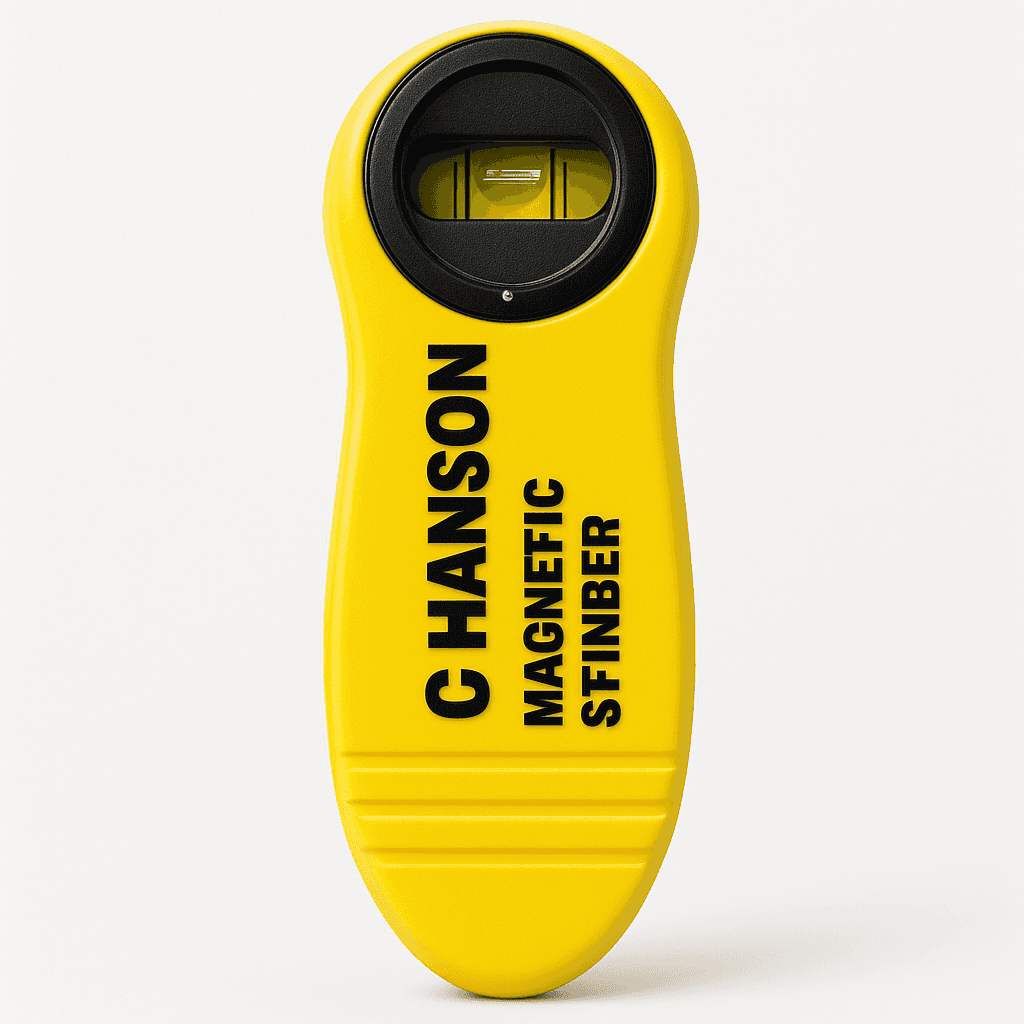
The CH Hanson Magnetic Stud Finder is our Best Battery-Free pick because it's genuinely unbreakable simplicity: no batteries, no electronics, no calibration, ever. The buyer here wants the simplest, most failure-proof tool possible, often a renter, an infrequent DIYer, or anyone hanging a single item like a mirror, small shelf, or curtain rod who's been burned by a battery-dead or miscalibrated electronic stud finder and just wants something that always works. One concrete detail is how it actually finds a stud: rare-earth magnets physically pull toward the metal screws or nails that anchor drywall to studs, so you feel and see the magnet snap toward the fastener rather than reading a density change on a display. It works through drywall, plaster, and wood paneling. A second detail is the built-in rotating level, which lets you draw both horizontal and vertical reference lines without switching tools, useful for keeping a row of shelf brackets or a picture gallery aligned once you've found your studs. The tradeoff is real: it can't find a stud that has no existing screws or nails in the scanned area, so bare or unfinished stud bays, or studs held only with construction adhesive, won't register. It also has no AC-wire detection or any electrical safety feature, making it riskier than the electronic picks for drilling into finished walls with unknown wiring, and it's slower than electronic units for finding a stud "cold" since you're sweeping for scattered fasteners rather than getting an instant readout. Skip this one if you're scanning a bare wall or need live-wire detection near known wiring. Buy it if you want a low-cost, unbreakable tool that will never let a dead battery or bad calibration ruin a project.
Prices and availability were recorded when this article was written and are subject to change. The price and availability shown on Amazon at the time of purchase apply.
Zircon StudSensor A100 Edge Finding Stud Finder Wall Scanner
Franklin Sensors ProSensor 710+ Stud Finder, 13-Sensor Wall Scanner
Zircon MultiScanner i520 Center-Finding Stud Finder with Metal and AC Electrical Scanning
CH Hanson Magnetic Stud Finder, Battery-Free Stud Locator with Rare Earth Magnets
Best Use
Occasional, Simple Projects Like Shelves or Curtain Rods
Real Projects Like Shelving, Gallery Walls, and Cabinet Installs
Renovation and Finished-Wall Work Near Wiring or Pipes
Failure-Proof, Battery-Free Stud Location
Detection Depth
Up to 3/4 in. Standard, 1 1/2 in. DeepScan
Up to 1.5-1.6 in.
Up to 3/4 in. Standard, 1 1/2 in. DeepScan
Limited to Fastener Depth (Typically 1/2-5/8 in. Drywall)
Detection Modes
Stud (Standard + Deep) and AC Wire Warning
Wood and Metal Stud Detection
Stud (Standard + Deep), Metal, and AC Wire Warning
Magnetic Fastener Detection Only
Ownership Detail
Edge-Finding, LCD Display, 9V Battery
Center-Equivalent 13-LED Array, No Display, 2x AA Batteries
Center-Finding, Backlit LCD Display, 9V Battery
Edge-Finding via Fasteners, Built-In Level, No Battery Ever
Why We'd Buy It
Best Value for Occasional, Simple Projects
Best Overall Balance of Speed, Accuracy, and Ease of Use
Best for Metal and Live-Wire Detection on Finished Walls
Best for Failure-Proof, Battery-Free Simplicity
If you only hang something once or twice a year and want a scanner that's cheap, simple, and won't intimidate you, look for basic edge-finding with at least one deep-scan mode rather than paying up for features you'll rarely use. The Zircon StudSensor A100 covers that need well, with two scan depths and a basic AC-wire warning built into an inexpensive, one-button tool.
If you're working on a real project like shelving, a gallery wall, or a cabinet install and want fast, confident stud location without a learning curve, look for a multi-sensor array that shows the full width of a stud at once instead of a single point. The Franklin Sensors ProSensor 710+ is built for exactly that, lighting up all 13 sensors simultaneously so you can see adjacent studs and stud width in one pass.
If you regularly work in older homes or finished walls where hitting a live wire or an unmarked pipe is a real risk, prioritize a unit with explicit AC-wire and metal detection rather than assuming any stud finder includes it. The Zircon MultiScanner i520 is the only pick here with four full detection modes, including live-wire scanning, which is the single biggest reason to pay up from the mid-tier pick.
If you've been burned by a dead battery or a miscalibrated electronic unit and just want something that always works, prioritize reliability over speed or extra features. The CH Hanson Magnetic Stud Finder has no electronics or batteries to fail, and it doubles as a basic level, at the cost of only being able to find studs that already have a fastener in them.
Buy the Zircon StudSensor A100 if you only hang things a couple of times a year and want an inexpensive, simple scanner that still includes live-wire detection.
Buy the Franklin Sensors ProSensor 710+ if you want fast, accurate stud location for a real project like shelving or a cabinet install without a learning curve.
Buy the Zircon MultiScanner i520 if you regularly work in older homes or finished walls and want metal and live-wire detection alongside precise stud centers.
Buy the CH Hanson Magnetic Stud Finder if you want a low-cost, battery-free tool that's effectively impossible to break or miscalibrate.
The best stud finder depends on how often you use one and how much precision or extra safety detection the job actually calls for. Choose the Zircon StudSensor A100 if you're an occasional DIYer who wants an inexpensive, reliable scanner for simple projects. Choose the Franklin Sensors ProSensor 710+ if you want fast, accurate center-equivalent stud location for a real project without a learning curve. Choose the Zircon MultiScanner i520 if you regularly work in older homes or finished walls and want metal detection and live-wire warning alongside precise stud centers. Choose the CH Hanson Magnetic Stud Finder if you want a battery-free tool that's effectively impossible to break or miscalibrate.
If you're still unsure, most people should start with the Franklin Sensors ProSensor 710+. It covers the way most home-improvement projects actually go: finding one or more studs accurately and quickly without needing metal or live-wire detection on every job, and its 13-sensor array makes it genuinely easier to use correctly on the first try than a single-point scanner, which matters more for most buyers than saving a little money or adding features they won't reach for often.
Related articles
Explore more expert comparisons and buying guides to help you find the perfect product.


As an Amazon Associate I earn from qualifying purchases.