Updated July 15th, 2026
A portable power station earns its place in a car trunk, a closet, or a camp kit fast the first time the grid goes down or you're a full day from an outlet. Unlike a gas generator, it runs silently, works indoors without fumes, and switches on instantly instead of needing to be started, fueled, and vented. Whether you're keeping a fridge and a router alive during a storm outage, charging cameras and laptops on a weekend trip, or topping off a phone on a multi-day hike, the right power station depends far more on how much power you actually need to move than on which one has the most features.
For this guide, we looked at four portable power stations built for very different households and use cases. Some buyers just want a light, affordable way to keep small devices charged away from an outlet. Others want one capable station that can handle a real outage or a weekend of van life without needing a second unit. A smaller group of buyers is bracing for extended, multi-day outages and wants a genuine whole-home backup system, and a distinct group of ultralight backpackers needs the lightest possible way to keep a phone or GPS device charged for days on end. The four picks below each fit a different buyer. The Anker SOLIX C1000 is the best overall portable power station for most households, the Jackery Explorer 300 is the best value pick for buyers who mainly need to charge small devices affordably, the EcoFlow DELTA Pro 3 is the best pick for whole-home backup during extended outages, and the Anker SOLIX C300 DC is the best pick for ultralight backpackers who need the lightest possible power source.
As an Amazon Associate I earn from qualifying purchases. Links on this page are affiliate links.
We compared portable power stations based on usable capacity (measured in watt-hours), continuous and surge output, port selection, weight and portability, recharge speed, and battery chemistry, then matched each of those tradeoffs to a specific kind of buyer rather than ranking every unit against a single "best" standard. A power station that's great for backpacking is a poor choice for home backup, and a unit sized for whole-home use is overkill and overweight for someone who just wants to charge a phone and a camera on a weekend trip. We also weighed recharge speed heavily, since a power station that takes many hours to refill is far less useful during a multi-day outage or a fast-moving camping trip than one that can top up in under an hour, and we noted where battery chemistry (LiFePO4 versus standard lithium-ion) affects how many years of daily use you can expect to get out of the unit.
Quick Notes
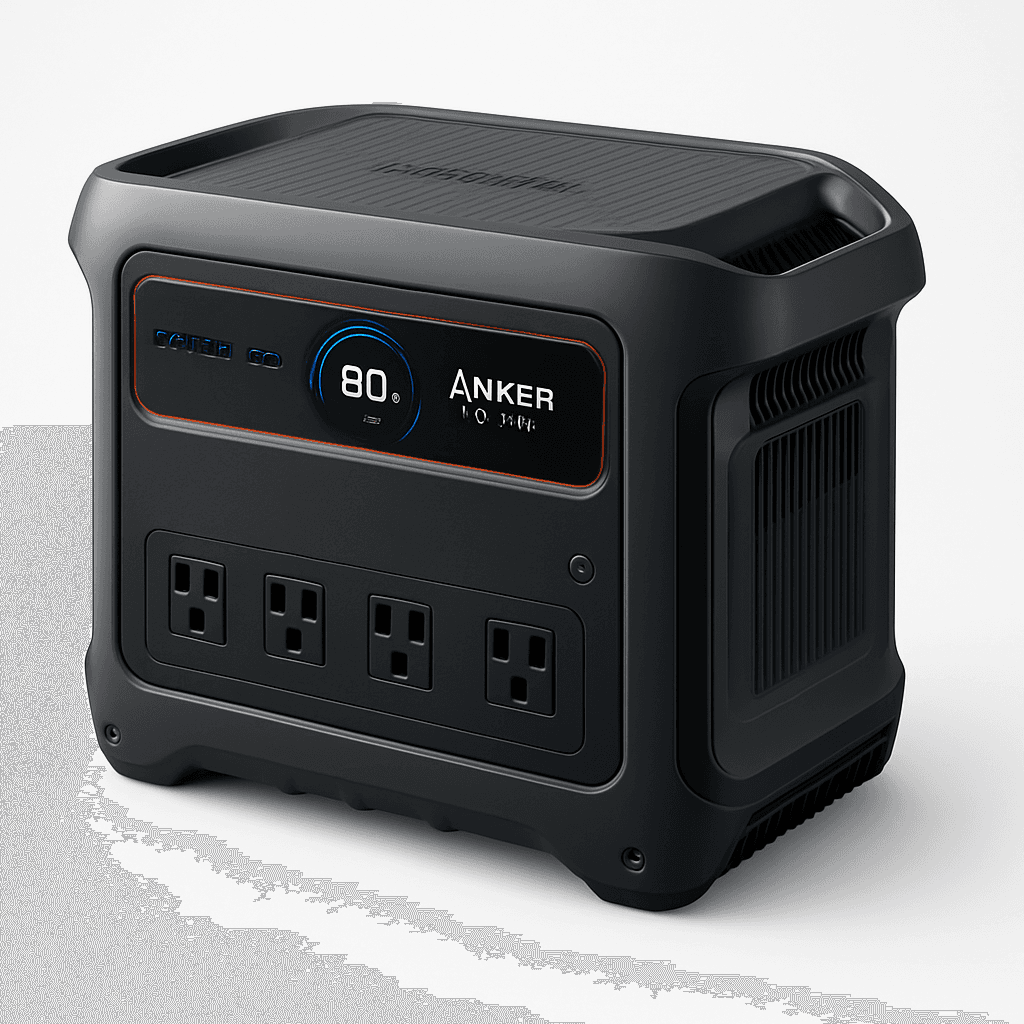
The Anker SOLIX C1000 is our Best Overall pick because it strikes the balance most buyers actually need - enough capacity and output to matter during a real power outage or a serious weekend of camping or van life, without the price, weight, or complexity of a whole-home backup system. The buyer here is someone who wants one power station capable of running a fridge, a router, and a few lights at once during an outage, or handling serious weekend car camping or van use. This isn't built for ultralight backpacking, and it's not sized to run a house on its own through a multi-day storm. One concrete detail that matters is recharge speed - in its fastest charging mode the C1000 can go from empty to full in under an hour on a wall outlet, dramatically faster than most competitors in this capacity class. A second detail worth noting is the port selection: eleven total ports, including six AC outlets plus fast USB-C and USB-A charging, along with an add-on battery option that roughly doubles capacity later without buying a second unit. The tradeoff is weight. At over 28 pounds, this isn't something you carry one-handed to a campsite - it needs a dedicated spot in a car or garage and two hands to move. Skip this one if you need something you can carry long distances on foot or you're mainly charging small devices on a budget. Buy it if you want a genuinely capable power station for home backup or serious camping that recharges fast and can grow with you.
Prices and availability were recorded when this article was written and are subject to change. The price and availability shown on Amazon at the time of purchase apply.
Quick Notes

The Jackery Explorer 300 is our Best Value pick because it gives budget-conscious buyers a genuinely portable way to keep small devices charged, at a fraction of the price and weight of the larger units on this list. The buyer for this Jackery is a light packer, student, or casual outdoor user who mainly needs to keep a phone, tablet, laptop, or camera gear charged on a weekend trip, tailgate, or during a short power blip. It's a solid first power station or a straightforward entry point into the category without a big financial commitment. One concrete detail is the 7.1-pound weight, light enough for a genuine one-hand carry in a daypack or car door pocket, paired with a 293Wh capacity that covers several phone and laptop charges. A second detail is the simple, clearly labeled front panel with an LCD screen showing battery percentage and input/output status, backed by a reputable two-year-plus-extendable warranty. The tradeoff is output. At 300W continuous, it can't run higher-draw appliances like space heaters, hair dryers, or large coolers, and it uses standard lithium-ion rather than the longer-lasting LFP chemistry found in the other picks here. Skip this one if you need to run anything beyond small electronics or you want the longest possible battery lifespan. Buy it if you mainly want an affordable, lightweight way to keep devices charged away from an outlet.
Quick Notes
The EcoFlow DELTA Pro 3 is our pick for whole-home backup because it's built for a genuinely different scale of problem than the other three power stations on this list - keeping a household's essential systems running through an extended, multi-day outage. The buyer here lives somewhere prone to storms, wildfire-related shutoffs, or an unreliable grid, or is outfitting an off-grid cabin or a large RV or van build that needs to run high-draw appliances for extended stretches. This isn't aimed at backpackers or minimalist campers. One concrete detail is the massive 4,096Wh capacity paired with 4,000W of continuous output, genuinely capable of running a fridge, a well pump, and a furnace blower simultaneously, with expansion available up to 12kWh or more per unit. A second detail is recharge speed for its size: it can go from empty to 80% in roughly 50 minutes via a wall outlet, which is competitive with units a fraction of its capacity. The tradeoff is size and weight. At around 114 pounds, this is a stationary, wheeled unit rather than something you toss in a trunk, and it represents a serious investment purchase rather than an impulse buy. Skip this one if you're outfitting a car camping trip or backpack rather than a home. Buy it if you're bracing for extended outages and want an expandable system that can genuinely keep a household running.

Quick Notes

The Anker SOLIX C300 DC is our pick for ultralight backpacking because it strips a power station down to what actually matters on a multi-day trip carried entirely on foot - charging small devices without adding noticeable weight to a pack. The buyer here is a backpacker, thru-hiker, or ultralight camper who needs to keep a phone, GPS device, headlamp, or camera battery topped up on multi-day trips and counts every ounce in their pack. It also works well as a lightweight satellite unit for van-lifers or car campers who want something they can carry away from the vehicle. One concrete detail is the 6.17-pound weight paired with 288Wh of capacity, genuinely light enough to clip to or stash in a backpack without a second thought. A second detail is the built-in pop-up camp light, a clever camping-specific feature most competitors in this size class skip, along with fast dual USB-C PD charging that can take it from empty to 80% in about an hour. The tradeoff is that this unit has no AC outlet at all - it's strictly a USB-C and USB-A device charger, not a substitute for a "real" power station if you need to run anything with a standard plug. Skip this one if you need to run AC-powered gear or want a single power station for both home and trail use. Buy it if you're backpacking or ultralight camping and just need to keep small devices charged for days at a time.
Prices and availability were recorded when this article was written and are subject to change. The price and availability shown on Amazon at the time of purchase apply.
Anker SOLIX C1000 Portable Power Station
Jackery Explorer 300 Portable Power Station
EcoFlow DELTA Pro 3 Portable Power Station
Anker SOLIX C300 DC Portable Power Station
Best Use
Home Backup and Serious Camping or Van Use
Weekend Trips and Everyday Device Charging
Whole-Home Backup During Extended Outages
Ultralight Backpacking and Device Charging
Capacity
1,056Wh, Expandable to 2,112Wh
293Wh
4,096Wh, Expandable to 12kWh+
288Wh
Output/Ports
1,800W Continuous, 11 Ports Incl. 6 AC Outlets
300W Continuous, 2 AC Outlets Plus USB-C/USB-A
4,000W Continuous, 7 AC Outlets Plus USB
300W, USB-C/USB-A Only, No AC Outlet
Ownership Detail
28.4 lbs, LFP Battery, Sub-Hour Fast Recharge
7.1 lbs, Li-ion Battery, One-Hand Portable
114 lbs, Wheeled Design, IP65-Rated Battery Pack
6.17 lbs, LFP Battery, Built-In Pop-Up Camp Light
Why We'd Buy It
Best Overall Balance of Power and Portability
Best Value for Everyday Portable Charging
Best for Whole-Home Outage Backup
Best for Ultralight Backpacking
If you want one power station that can handle a real home power outage or a serious weekend of car camping or van life without being the size of a mini-fridge, start with capacity in the roughly 1,000Wh range and continuous output high enough to run a fridge, a router, and a few lights at once. The Anker SOLIX C1000 is built for exactly that buyer and adds unusually fast recharge speed on top, which matters most when outage windows are short and unpredictable.
If your main goal is just keeping phones, tablets, a laptop, or camera gear charged on weekend trips, tailgates, or during short power blips, you don't need a large, heavy unit, and you shouldn't pay for one. The Jackery Explorer 300 covers that need at a fraction of the weight and cost of the larger picks here, as long as you accept that it can't run higher-draw appliances.
If you live somewhere prone to multi-day outages - storms, wildfire-related shutoffs, or an unreliable grid - or you're outfitting an off-grid cabin or a large RV build, capacity and output matter more than portability. The EcoFlow DELTA Pro 3 is sized to run essentials like a fridge, a well pump, or a furnace blower for an extended stretch, and it's built to expand into a larger whole-home system, but it's a stationary investment rather than something you casually toss in a trunk.
If every ounce in your pack matters and you're carrying a power source for days at a time on foot, a large power station is the wrong tool entirely. The Anker SOLIX C300 DC is built specifically for that buyer, trading AC outlets and higher output for a fraction of the weight, so you can keep a phone, headlamp, or GPS device charged without noticing the extra weight on your back.
Buy the Anker SOLIX C1000 if you want one power station capable of handling a real home outage or serious camping and van use, with fast recharge speed and room to expand capacity later.
Buy the Jackery Explorer 300 if you mainly want an affordable, lightweight way to keep phones, tablets, laptops, or camera gear charged and don't need to run larger appliances.
Buy the EcoFlow DELTA Pro 3 if you're bracing for extended, multi-day power outages or outfitting an off-grid cabin or large RV build and need to run high-draw appliances for extended periods.
Buy the Anker SOLIX C300 DC if you're a backpacker or ultralight camper who needs the lightest possible way to keep small devices charged over multiple days on the trail.
The best portable power station depends far more on how much power you need to move and how far you need to carry it than on which unit has the longest feature list.
Choose the Anker SOLIX C1000 if you want the best overall portable power station for home backup or serious camping and van use, with fast recharge speed and room to expand capacity later. Choose the Jackery Explorer 300 if price and portability matter most and you're mainly keeping small devices charged. Choose the EcoFlow DELTA Pro 3 if you're bracing for extended, multi-day outages and want a genuine whole-home backup system. Choose the Anker SOLIX C300 DC if you're an ultralight backpacker who needs the lightest possible way to keep essential devices charged for days at a time.
If you're still unsure, most households should start with the Anker SOLIX C1000. It's the safest long-term pick because it's capable enough to matter during a real outage, portable enough to bring camping, and flexible enough to grow with an add-on battery if your needs increase later, without asking you to commit to a stationary whole-home system or accept the limits of a device-charging-only unit.
Related articles
Explore more expert comparisons and buying guides to help you find the perfect product.


As an Amazon Associate I earn from qualifying purchases.